
ServicesNew Roofs
A new roof, built as a system.
A roof isn't shingles — it's a system. Ours is built from the deck up and warranted for thirteen years of workmanship.
The system, layer by layer
We tear off to the deck and repair or replace any compromised plywood before anything new goes on. Then top-tier synthetic underlayment across the field, fire & ice peel-and-stick membrane at every critical water-flow area — eaves, valleys, and around penetrations — and Owens Corning Duration architectural shingles over it all. Ventilation is designed in, not bolted on, so the system breathes and lasts.
Why Owens Corning Duration
Duration shingles carry Owens Corning's SureNail strip — a woven reinforcement in the nailing zone that grips fasteners in exactly the place roofs fail first in wind. On top of the manufacturer's material warranty, our own 13-year workmanship warranty covers the way it's installed — in writing.
What the build looks like
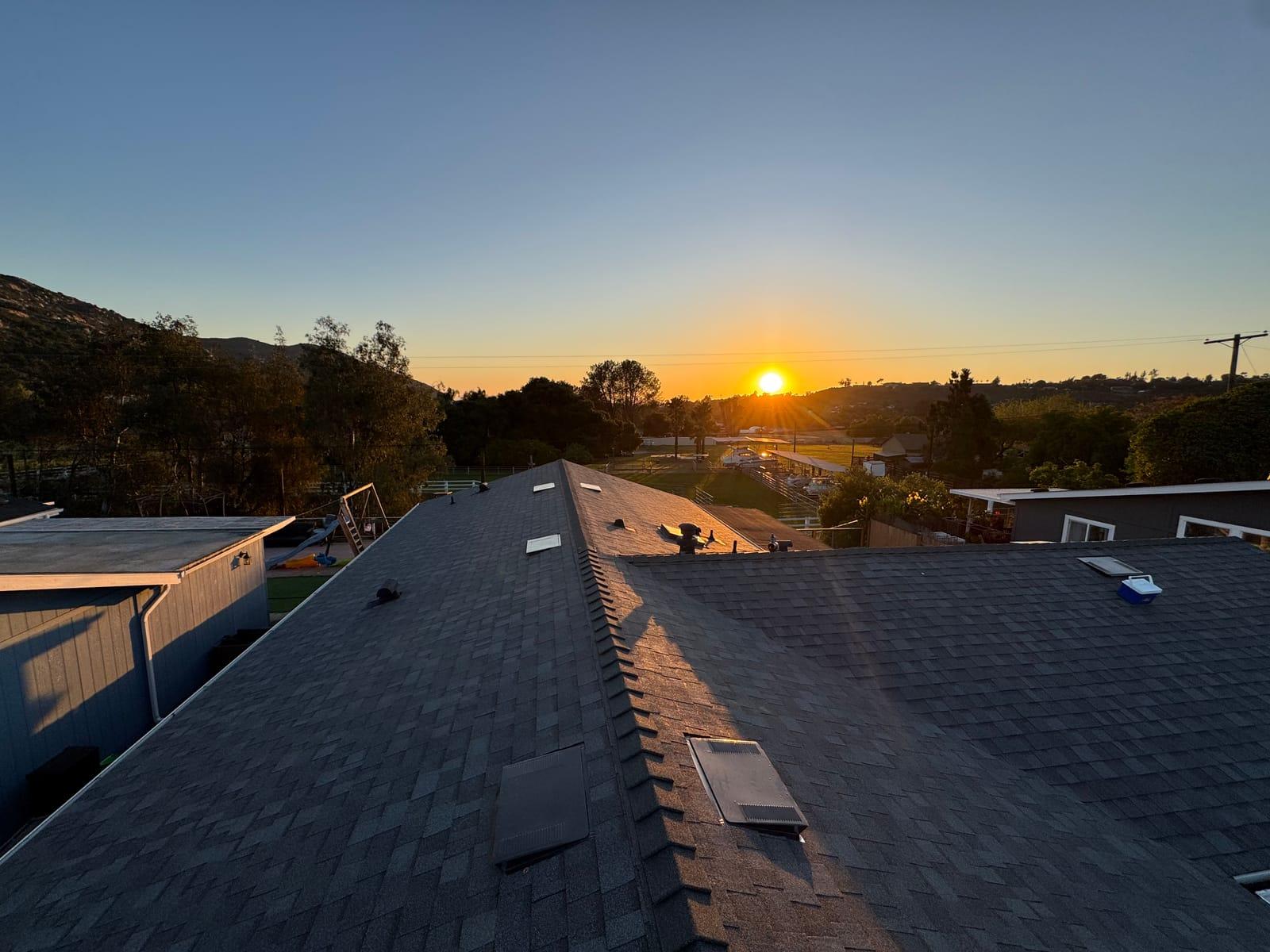
Tear-off and dry-in come first, then shingles and detail work. The site stays livable — landscaping tarped, debris hauled daily, driveway magnet-swept for nails before the crew leaves each evening. Permits and paperwork are ours to handle, not yours.
When replacement is the right call
We recommend a new roof when repairs would only buy a season or two: widespread granule loss, brittle or curling shingles, multiple layers hiding soft decking, or a roof simply at the end of its service life. If a repair genuinely solves it, we'll tell you that instead — the inspection photos don't lie.
How it runs
- 01
Free inspection
We get on the roof, not just the curb — and you get photos of what we find, good or bad.
- 02
A straight quote
Itemized line by line: tear-off, materials, labor, disposal. No allowances, no surprises.
- 03
The build
Clean site every day — landscaping tarped, and the driveway magnet-swept for nails before the crew leaves.
- 04
Warranted in writing
A 13-year workmanship warranty in writing, with every permit and paper filed for you.
Signs it is time to call
- Leaks keep coming back in new places after repairs
- Shingles are curling, cracking or worn bare of their granules across large areas
- The roof has more than one layer of shingles already
- Soft spots underfoot or a sag between rafters, which can point to damaged decking
- The roof is at the end of its service life for its material, even if it is not leaking yet
Materials and choices
Architectural shingles
Architectural, or laminated, shingles are thicker than the older flat three-tab style and give the roof more depth and shadow. The ones we install are Owens Corning Duration, which carry a reinforced nailing strip where wind tends to pull shingles loose. Color is a real choice too: lighter colors reflect more sun, darker ones hide dirt and streaks better.
Underlayment
Under the shingles is the layer that keeps water out when wind drives rain under the edges. Synthetic underlayment is lighter and tears less easily than traditional felt and lies flat as it goes down. We use it across the whole roof, with fire and ice peel-and-stick membrane at eaves, valleys and around penetrations.
Tear-off to the deck
Some roofs can legally take a new layer over the old one, but that hides the deck. We tear off to the plywood so any soft or damaged sheets are found and replaced before the new roof goes on, and each replaced sheet is on the itemized quote.
Ventilation
A roof needs air coming in low at the eaves and leaving high at the ridge or through vents. When that balance is off, attic heat bakes the shingles from underneath. A re-roof is the cheapest time to fix it, because the roof is already open.
San Diego County conditions
Heat inland
East County summers run much hotter than the coast. Attic heat shortens shingle life, so ventilation and color matter more on an El Cajon or Santee house than on one near the beach.
Energy and fire rules
California's energy code can require a roof product with a minimum sun-reflectance rating on a re-roof, depending on the climate zone. Homes inside a mapped fire hazard severity zone can also face stricter roof fire-rating rules. The permit office tells you what applies at your address, and the permit covers it.
Permits
Replacing a roof in San Diego County normally needs a building permit from the city, or from the County for unincorporated areas, and the job closes with an inspection. We file the permit and the paperwork for you.
Questions to ask any roofer
Whoever you hire, these questions sort a careful roofer from a quick one. Ask us the same.
- 01Will you tear off to the deck, and how is damaged plywood priced?
- 02Which underlayment and which shingle line will you use, by name?
- 03Who pulls the permit, and is the final inspection part of the job?
- 04How will my landscaping, driveway and pets be protected, and how are nails cleaned up?
- 05What does your workmanship warranty cover, and is it in writing?
New Roofs: common questions
- How long does a new roof take?
- It depends on the size of the roof and on what turns up once the old one is off. You get a schedule before the work starts and a call if weather moves it.
- Can I stay home while the roof is replaced?
- Yes. Expect noise during tear-off and keep cars out of the driveway while the crew works. The landscaping is tarped and the driveway is magnet-swept for nails before the crew leaves each day.
- What if the decking under the old roof is bad?
- We replace what is damaged, sheet by sheet, and you see it in the photos and on the itemized quote. Nothing is covered over.
Where we work
We work across San Diego County. These pages explain what is different about roofs in each place.